“2020-1-EL01-KA101-077682”
INCLUSIVE AND INNOVATIVE SCHOOL

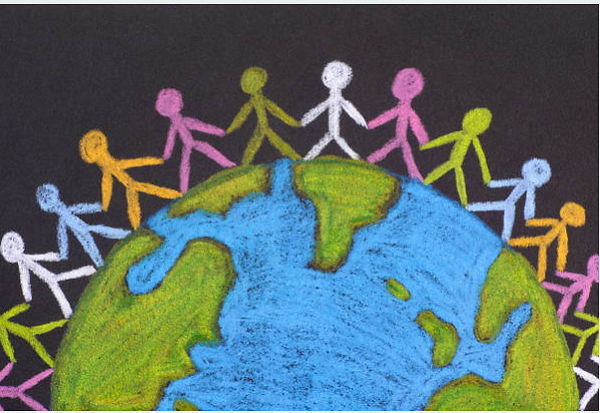
Inclusive Education
Inclusive education is defined as providing a learning environment that promotes the full personal, academic and professional development of all learners irrespective of race, class, colour, gender, disability, learning styles and language.
Inclusion is a right, not a privilege for a selected few

Principles of inclusive education
No discrimination against students
Equal educational opportunities for all
School adapts to the needs of students
Equal educational benefits for all students
The student’s views are listened to and taken seriously
Individual differences between students are a source of richness and diversity and not a problem
Aims and objectives of inclusive education
Education for all
Protection of rights
Identification of skills
Development of social consciousness
To prepare students for new challenges
Development of brotherhood
To improve the quality of education


Problems faced by students
Inferiority complex
Lack of understanding
Adjustment problem
Isolated/ segregated
Lag behind
Feeling of extra burden
Insecurity
Lack of expression
Introvert nature
Negative approach
Shyness
Role of the teacher
Interaction with family
To be able to solve their problems
To develop new learning strategies
To be able to develop their self-confidence
To be able to provide special facilities
To be able to look after their personal needs
To be able to recognize their hidden talents
To inspire positive attitude

Barriers to inclusive education
Negative approach
Lack of physical facilities
Lack of funds
Lack of trained teachers
Social discrimination
Emotional problems
Educational problems
Policymakers
Poor organization of education system
Strategies to improve inclusive education
Mainstreaming (the act of including people who
have particular difficulties or needs in the same schools or places of work as everyone else)
Encourage students
Improve textbooks
Special training for teachers
Special care for special children
Improve methods of teaching
Provision of required resources
Poor organization of the education system
.jpg)
The onion values
5 teachers' values for educational coaching into intercultural classroom environment;
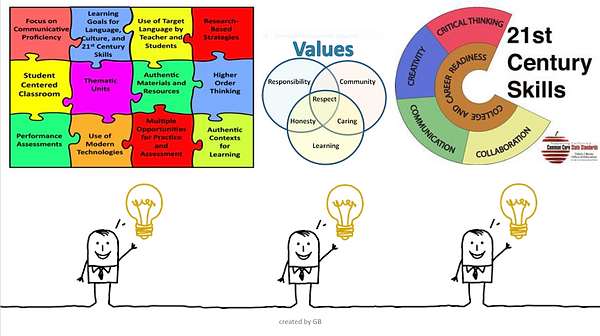

Defining school environment
EU: Improving Competences for the 21st Century.
The European Reference Framework on key competencies.
Key competencies for lifelong learners in multicultural societies.

The "Connection between Culture and Inclusion" was discussed during the course. Various workshops and activities were held on the following topics:
-
Prejudice and tolerance limits.
-
Images and stereotypes about different minorities.
-
Stereotypes and prejudice in the classroom.
-
Using strategies to raise awareness about social inclusion.
-
The basics of inclusive education.
-
Inclusive communication and education.
What is Culture?
Culture can be pictured as an iceberg: only a very small portion of the iceberg can be seen above the water line.
There are some visible parts: architecture, art, cooking, music, language, just to name a few. But the powerful foundations of culture are more difficult to spot: the history of the group of people that hold the culture, their norms, values, basic assumptions about space, nature, time, etc. The iceberg model implies that the visible parts of culture are just expressions of its invisible parts. It also points out, how difficult it is at times to understand people with different cultural backgrounds – because we may spot the visible parts of “their iceberg”, but we cannot immediately see what are the foundations that these parts rest upon.
Source http://intercultural-learning.eu/?s=intercultural+iceberg&lang=en
Intercultural iceberg
Cultural Iceberg Activity
It is hard to include all aspects of culture in one definition; therefore, it is easier to show it with the help of the iceberg analogy. In this analogy both deeper (invisible) and exterior (visible) layers of culture are depicted.
First, explain this analogy to students. Then divide them in groups of 3-4 people. Provide each team with a picture of an iceberg and a set of different aspects of culture. Ask students to complete the iceberg with the given aspects of culture by dividing them into visible and invisible layers of culture. Let students have a discussion within their teams; they should complete this task by agreeing where to put each aspect among themselves. After students have finished the activity, watch the video about the Iceberg Analogy and compare their completed icebergs with the video. Finally, finish with a discussion about different aspects of culture.
Creating an inclusive learning environment: how to deal with Stereotype threat
STRATEGIES TO IMPROVE INCLUSIVE EDUCATION.
How to foster students’ inclusion, tolerance and intercultural awareness through non-formal,
informal and experiential learning activities.
An example of such an experiential learning activity is the DIE exercise
DESCRIPTION, INTERPRETATION, AND EVALUATION
Cultural pictures- handout
DESCRIPTION:
What I See (only observed facts)
INTERPRETATION:
What I Think (about what I see)
EVALUATION:
What I Feel (about what I think...positive or negative)
Students in groups receive different pictures.
After looking at the picture,
they fill in their own brief description of it.
The task for the group is:
1. to agree on a single description
2. based on the description, to suggest two interpretations
3. for each interpretation to suggest both a positive and a negative evaluation.
Aims
-
To challenge participants' stereotypes and prejudice about other people and minorities, and about images and associations.
-
To reflect on the perceptions different participants have of minorities.
-
To raise self-awareness about the limits of tolerance.
-
To confront the different values and stereotypes of the participants.
It is helpful to divide the statements we make about the world around us into these three categories. Making careful distinctions between describing, interpreting and evaluating can help us in interpersonal relations and conflict resolution as well as in intercultural communication.
The rationale for the exercise is the realization that these three kinds of observations are often not distinguished, and people react and speak from personal and cultural perspectives as if they were describing some objective truth. This is important when students from different cultural backgrounds come together. This simple exercise helps to foster a more thoughtful, sensitive, and exploratory atmosphere for serious discussions of more complex intercultural topics.
How to Improve Competences for the 21st Century- Key competencies for lifelong learners in multicultural societies.
Designing lessons and activities to support increasing diversity in contemporary classrooms and create emotions of empathy and tolerance

Conflict management strategies. Approaches to conflict.
During the course, we talked about conflict management strategies and various approaches to conflict.
-
Understanding the problem.
-
Conflict handling styles.
-
Peer mediation: students serving as peer mediators in the school environment.
-
Conflict in the classroom
-
Forum theatre.
TECHNIQUES TO SUPPORT SOCIAL INCLUSION
Conflict in the classroom.
Mediation and negotiation tools in the fight against the exclusion of people with fewer opportunities.
Motivation: the link between creativity and intercultural learning
Emphasis was placed on motivation. Student engagement can be increased by differentiated instruction.
We were presented with motivation tools for students that promote social inclusion in schools.
INCLUSIVE EDUCATIONAL PRACTICES
Coaching models that increase students’ engagement.
Intra and inter group dynamics. Tools for working with groups, group building activities.
Tuchman’s key stages in a team's development
Belbin team role theory
More tips on group building...
In order to strengthen the sense of teamwork in the workplace, it is vital that people have an understanding of diversity and be able to communicate about it. In order to help people learn how to recognize and correct stereotypes, find common ground, and be able to work with and celebrate differences within the team, open communication about diversity must be fostered.
It’s also important to mix large groups in different ways because we want the group to be able to generate new ideas, problem solve and discuss issues deeply and from various viewpoints. We also want to provide the participants with the opportunity to experience different opinions, and a wider range of options, and to be able to really consider the positives and negatives of the issue.
Icebreakers
They are exercises that are intended to help a group of people begin the process of forming and working with a team.
Some examples
First Impressions
Type: Icebreaker (individual perspectives, emotional triggers, respecting personal differences)
Time: 15 minutes (can vary depending on group size)
Purpose: To help participants get to know each other better.
Needs: Note cards/Post Its (Post Its are better because they can be displayed during the meeting),
pens/pencils/markers
Instruction:
Αll participants sit in a circle. Each participant writes one fact about his background, interests, or history that most people don't know.
Participants then fold up the cards and put them in the middle of the circle.
A group leader opens the cards and reads them one at a time.
Participants write down which person in the circle they believe the card addresses.
Each person then reveals his/her guess and then the writer reveals him/herself.
Getting to Know You
Type: Icebreaker
Time: 15 minutes (can vary depending on group size)
Purpose: To learn more about each other.
Team size: 4-10 members per group
Needs: Flip chart paper, markers
Instruction:
Provide each group with a large sheet of flip chart paper and markers.
Have them draw a large flower with a center and an equal number of petals to the number of participants in their group.
Through discussion within their group, have them find their similarities.
They should fill in the center of the flower with something they all have in common.
Each member should then fill in his or her petal with something about them that is unique - unlike any other member in their group.
Participants should be instructed that they cannot use physical attributes such as hair color, weight etc. This
encourages them to have more meaningful discussions with their group members).
Encouraged to be creative in their ideas and drawings.
I am…
Type: Icebreaker
Time: 15+ minutes (can vary depending on group size)
Purpose: Allows participants to introduce themselves. This can also be an in-depth exercise depending on time and participant attitude.
Needs: Handout, pens/pencils/markers
Instruction:
Distribute the I am…? form.
Ask participants “Who are you? On this form place your name in the center and then fill out each bubble with a descriptive word or words about who you are.”
Reflection:
Ask participants to volunteer and share what they wrote.
It is nice to recognize introverts by saying “I’m/We’re not going to call on anyone because we respect our participants who are introverts.”
After the volunteer participants have shared, you can ask:
What similarities/differences did you notice between our volunteers?
Did you identify with what someone else said during their introduction? If so, how?
It’s a Lie!
Type: Icebreaker, first impressions
Time: 15 minutes (can vary depending on group size)
Purpose: To illustrate how people often have different definitions of the same word.
Needs: N/A
Instruction:
Ask participants to share three things about themselves but one of the three must be a lie.
Examples: activities, hobbies, etc. Things that may not be easily known about them.
The other participants must then try to figure out which statement is a lie.
You can provide prizes for winning guesses if you would like to make it a competition.