“2020-1-EL01-KA101-077682”
INCLUSIVE AND INNOVATIVE SCHOOL

Σχέδιο διδακτικής με τη μέθοδο της ανεστραμμένης τάξης
Θέμα Σχολική γιορτή για την εθνική επέτειο της 25ης Μαρτίου 1821
Διδακτικοί στόχοι
Η ομάδα των εκπαιδευτικών προέβη στο εγχείρημα αυτό προκειμένου να δοκιμαστεί έμπρακτα και οργανωμένα σε συστηματικότερη κλίμακα η διδακτική μεθοδολογία της ανεστραμμένης τάξης.
Επιλέχθηκε ως θέμα το αφιέρωμα στην 25η Μαρτίου 1821, γιατί κρίθηκε ότι δεν θα επιβαρύνει τους μαθητές με το άγχος της αξιολόγησης / βαθμολόγησης, όπως οποιοδήποτε άλλο διδακτικό αντικείμενο. Επιπλέον το συγκεκριμένο θέμα άπτεται του γνωστικού υλικού της Ιστορίας της Γ’ Τάξης, γι‘ αυτό και η δράση προτάθηκε και παρουσιάστηκε στους μαθητές της Τάξης αυτής.
Οι προσδοκίες εκ μέρους των εκπαιδευτικών ήταν ότι οι μαθητές/τριες θα κατάφερναν να συνεργαστούν εποικοδομητικά, προκειμένου να αξιοποιήσουν το προταθέν υλικό, να το εμπλουτίσουν με άλλο της επιλογής τους, να εργαστούν κριτικά και δημιουργικά με στόχο ένα επιτυχές αποτέλεσμα.
Ειδικότεροι στόχοι:
-
Να προωθήσουμε τη συμμετοχή και την ενδυνάμωση των μαθητών, αναθέτοντάς τους το καθήκον να οργανώσουν τον εορτασμό μιας εθνικής επετείου, ενισχύοντας έτσι τη δημιουργικότητα, την ηγετική τους ικανότητα και τις ομαδοσυνεργατικές δεξιότητές τους.
-
Να ενσωματώσουμε την τεχνολογία στη μαθησιακή διαδικασία μέσω της χρήσης της πλατφόρμας e-class, επιτρέποντας στους μαθητές αφενός να έχουν πρόσβαση και να εμπλακούν σε πόρους πολυμέσων που ενισχύουν την κατανόησή τους για το ιστορικό γεγονός, αφετέρου να χρησιμοποιήσουν κοινή παρουσίαση Google για τη διευκόλυνση της συνεργασίας μεταξύ τους.
-
Να ενθαρρύνουμε μία - κατά το δυνατόν - ολιστική προσέγγιση στην εκπαίδευση, η οποία, χωρίς να παραγνωρίζει την αξία της πολιτιστικής και ιστορικής συνείδησης, προάγει ταυτόχρονα την ένταξη και την ποικιλομορφία.
-
Να γιορτάσουμε με τους μαθητές την Εθνική Επέτειο της 25ης Μαρτίου 1821 με ουσιαστικό και παιδαγωγικό τρόπο, σεβόμενοι τη γνωστική, τη συναισθηματική και την πολιτισμική σημασία της εκδήλωσης.
Συμμετέχοντες εκπαιδευτικοί
Αλιατάκη Ελένη, Αρβανιτοπούλου Σταυρούλα, Θεράπογλου Αικατερίνη, Τζανετάκη Αγγελική, Καμπουρίδης Γεώργιος, Καράλης Ιωάννης
Συμμετέχοντες μαθητές
Αγανικόλα Αναστασία, Ηλιάδου Θεοδώρα, Καμπουρίδου Μαρία, Κοτζαηλίας Στέφανος, Μαύρου Ιωάννα, Μωυσιάδου Ευτέρπη, Νίκογλου Ελισάβετ, Παναγιωτίδου Μαρία, Στύλο Ιγνάτιος, Τσενικλή Μαρία, Χατζηαναγνώστου Νικόλαος
Διαμοιρασμός αρμοδιοτήτων ομάδων
Υπεύθυνοι συντονισμού: Κοτζαηλίας Στέφανος, Μωυσιάδου Ευτέρπη, Νίκογλου Ελισάβετ
Υπεύθυνοι υπολογιστών / ψηφιακού υλικού: Καμπουρίδου Μαρία, Στύλο Ιγνάτιος,
Τσενικλή Μαρία, Χατζηαναγνώστου Νικόλαος
Υπεύθυνοι κειμένων: Αγανικόλα Αναστασία, Ηλιάδου Θεοδώρα, Παναγιωτίδου Μαρία
Βήματα / πορεία ενεργειών
-
13/2/ 2023: Ενημέρωση των μαθητών σχετικά με το project και
πρόσκληση εκδήλωσης ενδιαφέροντος.
2. 24/2/ 2023: Παγίωση της ομάδας των συμμετεχόντων και των αρμοδιοτήτων τους .
3. ( Κατά το ίδιο χρονικό διάστημα) Ανάρτηση σχετικού υλικού στην e-class εκ μέρους της ομάδας των εκπαιδευτικών. Μάθημα στην e-class.
4. 28/2 έως 23/3/2023: Εργασία των ομάδων και τακτικές συναντήσεις με τους εκπαιδευτικούς για επίλυση προβλημάτων και ανατροφοδότηση. Η ανατροφοδότησή τους εκ μέρους των εκπαιδευτικών ήταν μη παρεμβατική, προκειμένου να μην υποκατασταθεί η αυτενέργεια των μαθητών.
5. 24/3/2023 : Παρουσίαση στο σύνολο των μαθητών της Γ’ τάξης, παρευρισκομένων του Διευθυντή της σχολικής μονάδας και των υπευθύνων εκπαιδευτικών
6. 24/3/2023 : ( Μετά το πέρας της παρουσίασης ) Συζήτηση - Αυτοαξιολόγηση των μαθητών ως προς τη διαδικασία και το αποτέλεσμα της δράσης
Συμπεράσματα/ Επανατροφοδότηση
Θετικά Σημεία
-
Μία εξαιρετικά θετική παρατήρηση ήταν η προθυμία των μαθητών να συμμετάσχουν στο project. Είναι σαφές ότι οι μαθητές ασχολήθηκαν ιδιαίτερα με το έργο. Αυτό είναι ένα βασικό πλεονέκτημα της χρήσης της μεθόδου της ανεστραμμένης τάξης, καθώς επιτρέπει στους μαθητές να οικειοποιηθούν τη διαδικασία για τη μάθησή τους.
-
Οι μαθητές ολοκλήρωσαν έγκαιρα την εργασία επιτυγχάνοντας ικανοποιητικό αποτέλεσμα, γεγονός που δείχνει ότι ήταν σε θέση να διαχειριστούν αποτελεσματικά το χρόνο τους και να αναλάβουν την ευθύνη για τη μάθησή τους.
-
Η προσπάθεια «αγκαλιάστηκε» από τους συμμαθητές, οι οποίοι παρακολούθησαν την παρουσίαση με ενδιαφέρον και προσοχή. Αυτό είναι ένα αξιοπρόσεκτο σημείο που πρέπει να τονιστεί, καθώς υποδηλώνει ότι η μέθοδος της ανεστραμμένης τάξης είναι σε θέση να καλλιεργήσει μια αίσθηση κοινότητας και υποστήριξης μεταξύ των μαθητών.
-
Ελάχιστοι από τους αρχικά δηλωθέντες μαθητές παραιτήθηκαν, και στο σύνολό τους - παρά τις μεταξύ τους διαφωνίες ή τριβές - ολοκλήρωσαν συνεργατικά την προσπάθειά τους, δείχνοντας ότι η μέθοδος της αντεστραμμένης τάξης μπορεί να προωθήσει τη συνεργασία και την ομαδικότητα μεταξύ των μαθητών.
Αρνητικά Σημεία
-
Η έλλειψη χρόνου απασχόλησε τους μαθητές ως αντικειμενική αντιξοότητα. Αυτό είναι κατανοητό λόγω των ποικίλων εξωσχολικών υποχρεώσεών τους , αλλά και δεδομένης της πολυπλοκότητας του έργου, και της απειρίας των μαθητών σχετικά με την ανάληψη και την υλοποίηση παρόμοιου εγχειρήματος.
-
Παρατηρήθηκε σχετική έλλειψη πρωτοτυπίας στη δημιουργικότητα των παιδιών. Ωστόσο, θεωρούμε πως αυτή η πρώτη εμπειρία έχει συμβάλει στο να είναι οι μαθητές μας περισσότερο εξοικειωμένοι και καλύτερα εξοπλισμένοι προκειμένου να αντιμετωπίσουν μελλοντικά έργα με μεγαλύτερη πρωτοτυπία.
Enhancing Student Learning through Flipped Classroom Strategies
The following lesson plan was implemented using the flipped classroom model for Junior high school English language learners with a CEFR level of A2/B1-. The lesson plan was designed to align as closely as possible with the school curriculum and was adapted from an educational scenario presented during a training session on distance teaching, T4E.
The lesson aimed to help students improve their ability to communicate about their travel experiences using the past tense.
The lesson was structured into four phases: An asynchronous phase before class, a synchronous phase in class, a second asynchronous phase after class, and a final synchronous phase in class.
Phase 1: This phase focused on providing students with access to new knowledge and study materials related to the theme of "holidays-travels" and the grammatical phenomenon of "use of Simple Past tense in narration," which was covered in Unit 4 of the coursebook "Think teen 1" Advanced. The teacher offered a variety of learning resources, such as videos, podcasts, and reading materials, which were available on the e Class platform. This allowed students to study at their own pace and to engage with the material in a way that suited their learning style.
Phase 2 - Synchronous: In Phase 2, the teacher gave feedback on previous activities and implemented interactive activities to encourage active student participation and practice using newly acquired knowledge. The teacher also divided the students into groups and assigned them to create a narrative of a journey using the newly learned vocabulary and grammatical structures in groups.
Phase 3 - Asynchronous: In this phase, the teacher assigned exercises and tasks to the students so that they would apply their new knowledge and evaluate their learning process. The teacher provided students with quizzes, assignments, and an evaluation questionnaire to assess their understanding of the subject. Students could complete the tasks and exercises at their own pace, and the teacher provided feedback and assistance to students.
Phase 4 - Synchronous: In the final synchronous phase of the lesson plan, students worked collaboratively to create engaging stories about specific tourist destinations using the past tense. The teacher provided support and addressed misconceptions or errors, and each group presented their enriched story to the class.
Expected goals and outcomes
-
Improved ability to communicate about travel experiences using the past tense
-
Collaborative work with diverse peers
-
Encouragement of personalized learning through the use of technology
PRACTICAL IMPLEMENTATION
Phase 1 - Asynchronous: Before class
In the first phase of the lesson, the teacher posted the learning objectives and course content on the e-Class platform. She also explained to students what they needed to do before they met in class. More specifically, the teacher prepared and posted an H5P course presentation that contained vocabulary, grammar, and consolidation exercises (embedded below). The presentation was designed to provide scaffolding for the lesson and help students with the activities they needed to complete before class. The teacher also incorporated an interactive video on the topic of travel and holidays (embedded below).
As part of their pre-class preparation, students studied the H5P presentation, completed the consolidation exercises (which involved filling in the blanks with verb forms in sentences and a song), and watched the Edpuzzle interactive video with embedded questions. They also participated in a chat on the e- Class platform where they could ask and answer questions related to the content. This phase of the lesson allowed students to engage with the material before coming to class, which facilitated more active and personalized learning during the subsequent phases.
Phase 2- Synchronous: While in class
At the beginning of the synchronous phase, the teacher used an overhead projector to display an online quiz created with Quizizz. The quiz assessed the students' understanding and consolidation of the basic lexical and grammatical points covered in the previous asynchronous phase related to the Past Tense narration. This allowed the teacher to quickly evaluate the students' progress and adapt the lesson accordingly.
Next, the teacher showed a PowerPoint (PPT) she had prepared, which included pictures related to travel and holidays. The students identified the pictures and wrote related sentences using the Simple Past tense they had learned in the previous phase.
Afterwards, the students were divided into groups of four people, designed to be diverse, with students of different abilities and backgrounds working together. Each group was assigned the task of creating a narrative of a journey based on the instructions they received. The students worked collaboratively to produce texts which were also used in the group work project assigned to them in the following phases. The teacher walked around the classroom to check in on the groups as they worked on their narratives, providing guidance or feedback on specific aspects of the past tense narration, such as accuracy of verb forms, use of time expressions, or organization of the narrative.
Toward the end of the lesson, a few minutes were set aside for the students to return to the plenary and discuss any difficulties they faced during the group work.
Phase 3- Asynchronous: After class
During this phase, the teacher created a Kahoot quiz on using the past tense in travel narratives and shared the link with the students in the respective e-Class Module.
Additionally, the teacher provided instructions for an individual task in which the students were asked to record narration using Voki , Vocaroo or Padlet and post it on a Padlet which was created for this specific activity in the respective module of e- Class. To help the students understand what was expected of them, the teacher provided an example of a brief vacation narration in the form of an MP3 file and uploaded in on the Padlet.
The students completed the online quiz, followed the instructions for the individual task, and posted their audio files on the Padlet. The students also listened to and commented on two classmates' audio files. Based on the feedback provided by their peers, the students had the opportunity to further improve their work and replace their audio files on the Padlet if they wished.
Finally, the students completed a Google Form questionnaire to reflect on their learning experiences. The questionnaire provided the teacher with valuable feedback on how to improve future lessons and ensured that each student had the opportunity to share their thoughts and opinions.
Phase 4 - Synchronous: In-Class
In the final phase, the focus was on producing the project of the unit, which consisted of the cooperative enrichment of stories about tourist destinations. The project was built on the texts written by the students in the previous synchronous phase.
Each group was assigned a specific tourist destination to enrich the story, and the teacher provided the groups with the necessary information. The teacher also set clear expectations for the project and reviewed the rubric for evaluation.
The students worked collaboratively to create an engaging story by incorporating the use of the Simple Past tense. They shared ideas and took turns writing and revising the text. They also practiced their oral skills by rehearsing and presenting their story to the class.
The teacher circulated among the groups, providing support. The teacher also used this opportunity to address any errors and to reinforce the language points related to the Simple Past tense narration.
At the end of the class, each group presented their enriched story to the class.
Conclusion
The flipped classroom approach provided students with access to study materials and new knowledge related to the theme of "holidays-travels" and the grammatical phenomenon of "use of Simple Past tense in narration." The asynchronous phase before class allowed students to study at their own pace, which suited their learning styles and catered to different ability students, promoting inclusion.
During the synchronous phases, the teacher encouraged active student participation and collaboration through interactive activities and group work, where students could apply their newly acquired knowledge and language skills to create engaging stories about tourist destinations using the past tense.
Inclusion was promoted through the creation of diverse groups, where all materials and instructions were accessible, and additional support was provided to students with learning differences or limited English proficiency (they were paired with more proficient peers to facilitate communication and understanding).
Assessments such as quizzes, assignments, projects, or peer evaluations were used to evaluate student progress throughout the lesson. The use of technology tools such as Quizizz, Kahoot, Voki, Vocarro, Edpuzzle, Animaker, Canva and Padlet also enhanced the learning process and made it more engaging for the students.
The Course Presentation and the Interactive Video that students were provided with during Phase 1
creating a narrative of a journey during Phase 2
recording a narration during Phase 3


Using the flipped classroom method and collaborative learning to teach Gender Equality
Sustainable Development Goal 5 (SDG 5)
The lesson plan was designed for students in the B class of Junior High School.
It was created within the framework of an English lesson taught by Eleni Aliataki
The main objectives of the lesson were
-
to develop students' vocabulary related to gender equality,
-
increase their awareness of gender-based discrimination,
-
develop their critical thinking skills,
-
and encourage them to collaborate and communicate effectively in groups.
The goal of the lesson was to foster students' understanding of the concept of gender equality, enhance their ability to identify areas where it is lacking in various countries and cultures, and encourage them to develop strategies for promoting gender equality within their own community.
Phase 1-Before class
In this phase, students were asked to log into the eclass platform to review a course presentation on gender equality vocabulary and complete an interactive drag-and-drop exercise with instant feedback. They were also asked to watch a video about SDG 5 and answer open-ended questions embedded in the video. This phase helped to prepare students for the class by giving them a foundation on the topic and familiarizing them with some of the key vocabulary and concepts.
 eclass platform |  course presentation created in eme and embedded in eclass |  key vocabulary presented |
|---|---|---|
 testing students' knowledge of new vocabulary |  ed puzzle video with embedded questions | 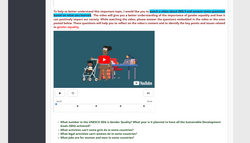 ed puzzle video |
Phase 2 While in class
Warm-Up and Group Work
In this phase, the teacher led a discussion about what students knew about gender inequality and if they had any personal experiences with it. This was followed by dividing students into groups of 4-5 to complete a mind map answering the questions they had been assigned before class. These phases helped to engage students and encourage them to share their thoughts and experiences on the topic.
Collaborative Learning
After the group presentations, the teacher facilitated a class discussion about the similarities and differences between gender inequality in different countries and cultures. Students also played a kahoot quiz on gender equality issues to evoke critical thinking about certain aspects related to the topic. This phase helped to encourage students to think critically about the topic and share their ideas with the class.
Phase 3: after class Group Work
In this phase, students were divided into new groups and each group was assigned a topic related to gender equality about what they observe in society. Therefore for homework, they had to collaborate with their peers and post on a Padlet to present their findings to the class. They also had to make comments on other groups' posts on the Padlet. This phase helped to encourage collaboration among students and allowed them to share their ideas and findings with the class.
 each group was assigned a topic related to gender equality and had to write on a Padlet |  |  |
|---|
Phase 4 While in class: presentation of Padlet posts-discussion
Reading the story of Malala
 Homework |  choiceboard |
|---|
During this phase of the lesson, students presented their posts on Padlet which focused on topics related to gender inequality. These posts were then discussed in the plenary. Next they read the story of Malala, which was created on the StoryJumper app by the teacher. The primary objective of this activity was to strengthen the students' comprehension and critical thinking skills while also enhancing their awareness of social issues and the importance of education.
The reading of Malala's story enabled students to connect with her experiences and grasp the significance of education in their lives. Additionally, it encouraged them to share their viewpoints and reflections on the narrative, resulting in a collaborative and inclusive learning atmosphere.
Phase 5: Final Project and Evaluation
In the final phase, students worked in pairs or groups to create a poster that promoted gender equality using images and words to convey their message and encourage others to take action. Alternatively, they could record a podcast or video, create a role-play scenario that demonstrates the effects of gender-based discrimination, or write an article that highlights a specific issue related to gender equality etc. This phase helped to encourage students to take action toward promoting gender equality and apply what they had learned in the lesson.
Evaluation questionnaires
To evaluate the effectiveness of the lesson, three Google form questionnaires were addressed to the students: teacher evaluation, self-evaluation, and peer evaluation.
In the Teacher Evaluation questionnaire, the aim was to assess the effectiveness of the approach used by the teacher and obtain feedback that would help in improving future lessons. The questionnaire asked questions such as whether the lesson was clear and understandable, whether the material was presented in an engaging and interactive manner, and whether the teacher effectively addressed any questions or concerns the students had.
In the Self-Evaluation questionnaire, students were asked to reflect on their own learning process and assess their own performance. The aim was to encourage students to consider their level of understanding of gender equality, their participation in the discussion and expression of their opinions, and their ability to complete assigned tasks.
The peer evaluation allowed students to provide feedback on their classmates' performance, including their participation, understanding, respect for different opinions, and positive contributions to the class discussion and activities.
Overall, the implementation of the flipped classroom method and collaborative learning approach provided an engaging and enjoyable learning experience for the students. They developed their critical thinking skills, improved their vocabulary, and participated in meaningful discussions about gender equality.
Εφαρμογή της ανεστραμμένης τάξης από τη φιλόλογο ειδικής αγωγής στο τμήμα ένταξης για το μάθημα της Ιστορίας
Δαλακούρα Κωνσταντίνα
ΣΧΕΔΙΟ ΜΑΘΗΜΑΤΟΣ
Διδακτικό αντικείμενο: Ιστορία
Τίτλος μαθήματος: Τα αίτια, η έκρηξη και τα μέτωπα του Α’ Παγκόσμιου πολέμου
Τάξη: Γ΄ (4 μαθητές)
Ώρα: 45’
Εποπτικά μέσα: Ένας σταθερός υπολογιστής, ένας βιντεοπροβολέας- διαδραστικός πίνακας και ένας έγχρωμος εκτυπωτής.
Στόχοι του μαθήματος:
-
Να έχουν σαφή αντίληψη των αιτιών του Α΄ Παγκόσμιου πολέμου
-
Να είναι σε θέση να διαχωρίσουν τα αίτια από την αφορμή
-
Να γνωρίσουν τα αντίπαλα στρατόπεδα
-
Να αξιολογήσουν τις συνέπειες του Α΄ Παγκόσμιου πολέμου
Λέξεις κλειδιά του μαθήματος: Α΄ Παγκόσμιος πόλεμος, αίτια, Κεντρικές Δυνάμεις, Αντάντ, ιμπεριαλισμός, εθνικισμός, μιλιταρισμός,
Μέθοδοι Διδασκαλίας: Ανεστραμμένη τάξη, Διαφοροποιημένη, ομαδοσυνεργατική.
Μαθησιακά εργαλεία-υλικά: Διαδραστικό βιβλίο μαθητή, φωτόδεντρο, online λεξικό-Πύλη για την Ελληνική γλώσσα, Εννοιολογικός χάρτης (Mindmup), παρουσίαση (Powerpoint), Βίντεο, σχεδιάγραμμα μαθήματος, φύλλα εργασίας, φύλλο αυτοαξιολόγησης μαθητών.
Πορεία διδασκαλίας:
-
Θα έχει δοθεί στους μαθητές υλικό για μελέτη στο σπίτι πριν τη διδασκαλία του μαθήματος. Οι μαθητές θα έχουν παρακολουθήσει στη διεύθυνση https://archive.ert.gr/625/ «Παρουσίαση όλων των ιστορικών γεγονότων από το ξέσπασμα του Α΄ Παγκόσμιου πολέμου μέχρι την απόβαση των δυνάμεων της Ανταντ στη Θεσσαλονίκη (1915)» και στη διεύθυνση https://www.youtube.com/watch?v=2ReqoCGdCqk
«Τα αντίπαλα στρατόπεδα»
Επίσης, θα έχουν βρει και θα έχουν καταγράψει τη σημασία των λέξεων ιμπεριαλισμός, εθνικισμός και μιλιταρισμός που αποτελούν τα αίτια του Α΄ Παγκόσμιου πολέμου στη διεύθυνση
-
Συζήτηση/ερωτήματα για τα βίντεο που παρακολούθησαν και παρουσίαση της σημασίας των λέξεων (ιμπεριαλισμός-εθνικισμός-μιλιταρισμός) Διάρκεια 10΄
-
Χωρισμός των μαθητών σε δύο ομάδες και εργασία για τη συμπλήρωση ενός εννοιολογικού χάρτη. Οι βασικές συνδέσεις θα έχουν δημιουργηθεί στο πρόγραμμα MindMup και οι μαθητές θα πρέπει να συμπληρώσουν τον υπόλοιπο χάρτη. Θα γίνει παρουσίαση των εννοιολογικών χαρτών. Διάρκεια 10’
-
Σύντομη παρουσίαση των βασικότερων σημείων του μαθήματος μέσω παρουσίασης (Powerpoint). Αίτια, αφορμή, αντίπαλα στρατόπεδα (διαδραστικός χάρτης- photodentro.edu.gr), συνέπειες Α’ Παγκόσμιου πολέμου και βίντεο https://www.youtube.com/watch?v=t16nTtQIXgk «Πανηγυρισμοί για τη λήξη του πολέμου». Διάρκεια 10’
-
Διαμοιρασμός σχεδιαγράμματος με τα σημαντικότερα στοιχεία του μαθήματος.
-
Χωρισμός των μαθητών σε δύο ομάδες και εργασία πάνω σε δύο διαφορετικά φύλλα εργασίας για εμπέδωση της νέας γνώσης. Και οι δύο ομάδες θα εργαστούν πάνω στις συνέπειες του Α΄ Παγκόσμιου πολέμου, η μία ομάδα θα έχει φωτογραφίες-διαγράμματα και η άλλη ομάδα σύντομο κείμενο με άσκηση κλειστού τύπου. Παρουσίαση των συνεπειών και από τις δύο ομάδες. Διάρκεια 10΄
-
Aξιολόγηση για τον έλεγχο της επίτευξης των στόχων και της εμπέδωσης της νέας γνώσης. Μία άσκηση κλειστού τύπου, με τη μορφή Σωστού/Λάθους που θα έχει δημιουργηθέι με το εργαλείο wordwall Διάρκεια 5΄
ΣΧΕΔΙΟ ΜΑΘΗΜΑΤΟΣ ΜΕ ΕΦΑΡΜΟΓΗ ΤΗΣ ΑΝΕΣΤΡΑΜΜΕΝΗΣ
ΤΑΞΗΣ ΣΤΟ ΜΑΘΗΜΑ ΤΗΣ ΝΕΟΕΛΛΗΝΙΚΗΣ ΛΟΓΟΤΕΧΝΙΑΣ
θεράπογλου Αικατερίνη
Διδακτικό αντικείμενο: Νεοελληνική Λογοτεχνία
Τίτλος μαθήματος: ‘’ Θερμοπύλες’’ του Κωνσταντίνου Καβάφη
Τάξη: Β΄ (21 μαθητές)
Ώρα: 2-3 διδακτικές ώρες
Εποπτικά μέσα: Ένας σταθερός υπολογιστής, ένας βιντεοπροβολέας-
διαδραστικός πίνακας.
Γενικοί Στόχοι του μαθήματος: Οι μαθητές θα πρέπει:
-
Να μάθουν για τη ζωή του ποιητή, την εποχή που έζησε, το έργο
του, τον τρόπο γραφής, τον τρόπο συγγραφής.
-
Να γνωρίσουν οι μαθητές την ποίηση του Καβάφη, τα
χαρακτηριστικά της, ιδιαίτερα την ιδιότυπη γλώσσα του .
-
Να γνωρίσουν τα είδη των ποιημάτων του Καβάφη, ιστορικά,
διδακτικά, αισθησιακά ώστε να εντάξουν το διδασκόμενο.
-
Να θυμηθούν από την Ιστορία της Α΄ γυμνασίου και να
μελετήσουν το ιστορικό συμβάν της μάχης των Θερμοπυλών με
την οποία σχετίζεται το ποιήμα.
-
Να κατανοήσουν τη σύνδεση του τοπωνυμίου Θερμοπύλες με το
σύμβολο στο οποίο μετατρέπεται, να κατανοήσουν τη λειτουργία των
συμβόλων στο ποιήμα
-
Να είναι σε θέση να αναγνωρίζουν την ποιητική γραφή του Καβάφη, να εξοικειωθούν με αυτήν.
Παιδαγωγικοί στόχοι: Οι μαθητές:
-
Να μάθουν να οικοδομούν μόνοι τους τη γνώση αξιοποιώντας τη διερευνητική μάθηση. Με τη μέθοδο αυτή τα παιδιά μαθαίνουν να σκέφτονται και να αξιοποιούν δημιουργικά το υλικό που τους δίδεται με μελέτη στο σπίτι.
-
Να εμπλακούν στη διαδικασία της μάθησης, να δραστηριοποιηθούν, να αναπτύξουν δεξιότητες.
-
Να κρίνουν να παρατηρούν, να δημιουργούν να εντοπίζουν, να επιλέγουν, να οργανώνουν απλές ιστορικές πληροφορίες.
-
Να επιτευχθεί η κινητοποίηση ενεργού ατομικής συμμετοχής σε συλλογική προσπάθεια αλλά και η αποτελεσματική συνεργασία.
-
Η ανάπτυξη της κριτικής σκέψης αποτελεί βασική παράμετρο της
καλλιέργειας των μαθητών , η οποία υπηρετεί παράλληλα τον περιορισμό της αποστήθισης και την απόκτηση της γνώσης.
Μέθοδοι Διδασκαλίας: Ανεστραμμένη διδασκαλία και ομαδοσυνεργατική.
Μαθησιακά εργαλεία-υλικά: Διαδραστικό βιβλίο μαθητή, φύλλο με θεωρία, φύλλο εργασίας με ασκήσεις για την τάξη και το σπίτι.
Πορεία διδασκαλίας:
-
Αρχικά χωρισμός μαθητών σε ομάδες εργασίας, ενημέρωση τους για το υλικό που θα δοθεί στην e class , ώστε να εργαστούν στο σπίτι. Για τη μία ομάδα αυτό είναι η Ιστορία Νεοελληνικής Λογοτεχνίας (σελ. 104-105) ή εναλλακτικά στο διαδίκτυο www.kavafis.gr, ή ένα powerpoint, ώστε να μάθουν για τη ζωή και το έργο του ποιητή. Επίσης για τη δεύτερη ομάδα βίντεο για τη μάχη των Θερμοπυλών:https://youtu.be/2ewtIFSnNYo και https://youtu.be/YC8DHNVx0rA. Η τρίτη ομάδα θα έχει ηχητικό υλικό της ανάγνωσης του ποιήματος.Θα δοθεί φύλλο με κατευθυντήριες ερωτήσεις. Επίσης θα προσδιοριστεί η δυνατότητα διαρκούς επικοινωνίας μέσω της πλατφόρμας e class για καθοδήγηση, επίλυση αποριών, διαρκήτροφοδότηση.
-
Στην τάξη θα παρουσιαστεί το αντίστοιχο υλικό από την κάθε ομάδα, θα επιλυθούν οι απορίες και τα προβλήματα της κάθε ομάδας, θα γίνει ανταλλαγή ιδεών μέσω διαλόγου, θα γίνει ανάλυση του ποιήματος, των βασικών θεμάτων του και των συμβόλων.
-
Θα συμπληρωθεί φύλο εργασίας με τα βασικότερα σημεία ως εμπέδωση του μαθήματος.
-
Θα δοθεί ως εργασία στο σπίτι εναλλακτικά η συγγραφή ενός ποιήματος , η απόδοση του ποιήματος σε πεζό , η ανάγνωση άλλων ποιημάτων του Καβάφη.
-
Η παρουσίαση των παραπάνω δημιουργικών εργασιών θα ολοκληρώσει το μάθημα.
Συμπεράσματα
Οι μαθητές ανταποκρίνονται θετικά στη μεθοδολογία αυτή, εκφράζουν υψηλά επίπεδα ικανοποίησης από το μάθημα, έχουν μεγαλύτερο ενδιαφέρον, ενώ σε αρκετές περιπτώσεις η διδακτική διαδικασία συνοδεύεται από βελτιωμένα μαθησιακά αποτελέσματα και την επίτευξη υψηλότερων βαθμολογικών επιδόσεων, συγκριτικά με την παραδοσιακή διδασκαλία.
Πλεονεκτήματα
-
ενεργή εμπλοκή των μαθητών στη μαθησιακή διαδικασία
-
άμεσα διαθέσιμο υλικό με τη βοήθεια της τεχνολογίας
-
καλύτερη διαχείριση του διδακτικού χρόνου, αύξηση χρόνου στοσπίτι
-
ανάπτυξη της κριτικής σκέψης
-
θετική προδιάθεση και αύξηση αλληλεπίδρασης
Μειονεκτήματα:
-
άνιση πρόσβαση στην τεχνολογία
-
αύξηση χρόνου μελέτης στο σπίτι
-
δημιουργία ψηφιακού υλικού
-
έλλειψη προετοιμασίας κάποιων μαθητών
ΘΕΡΜΟΠΥΛΕΣ (σελ. 192)
ΦΥΛΛΟ ΕΡΓΑΣΙΑΣ
Α. Σχετικά με τη ζωή και το έργο του
Αφού ανατρέξετε στην Ιστορία Νεοελληνικής Λογοτεχνίας (σελ. 104-105) ή εναλλακτικά στο διαδίκτυο www.kavafis.gr απαντήστε στις παρακάτω ερωτήσεις:
1. Πού γεννήθηκε ο Καβάφης, σε ποιες πόλεις και σε ποια εποχή έζησε;
2. Ποιο επάγγελμα άσκησε;
3. Πότε και από ποιον έγινε για πρώτη φορά λόγος για τον Καβάφη στην Ελλάδα;
4. Ποια στοιχεία της ποίησής του τον καθιστούν «ποιητή των μελλουσών γενεών»;
Μορφή_______________________________________________
Γλώσσα_______________________________________________
Το κυριότερο χαρακτηριστικό της ποίησής του είναι η __________
5. Ποια τα χαρακτηριστικά των ποιημάτων του ως προς τη μορφή και τη γλώσσα;
_____________________________________________________
_____________________________________________________
6. Πώς έφτανε στην τελική μορφή των ποιημάτων του και ποια ιδιότυπη εκδοτική τακτική ακολουθούσε;
_____________________________________________________
_____________________________________________________
7. Σε ποιες κατηγορίες διέκρινε ο ίδιος τα ποιήματά του και ποιες πρόσθεσαν οι μελετητές του;
Β. Επεξεργασία του ποιήματος (δομή, συμβολισμοί, ανάλυση)
1. Δείτε τα βίντεο για τη μάχη των Θερμοπυλών:https://youtu.be/2ewtIFSnNYo και
https://youtu.be/YC8DHNVx0rA Να προσδιορίσετε τι συνέβη στη μάχη των Θερμοπυλών:
-----------------------------------------------------------------------------------------------------------------------------------------
2. Να εντοπίσετε το θέμα του ποιήματος
----------------------------------------------------------------------------------------------------------------------------------------------------
3. Αφού εντοπίσετε τις τρεις ενότητες του ποιήματος, να δώσετε έναν πλαγιότιτλο για κάθε
ενότητα:
1η ενότητα στ 1-3
……………………………………………………………………………………………………………
2η ενότητα στ 4-10
……………………………………………………………………………………………………………
3η ενότητα στ 11-14
……………………………………………………………………………………………………………
4. Ποιο είναι το ήθος των ανθρώπων που υμνεί ο Καβάφης στο ποίημα του; Να απαντήσετε με λέξεις και φράσεις του ποιήματος.
----------------------------------------------------------------------------------------------------------------------------------------------------
5. Ποια σύμβολα υπάρχουν στο ποίημα; Τι συμβολίζουν;
----------------------------------------------------------------------------------------------------------------------------------------------------
6.Σχετικά με τη γλώσσα να επισημάνετε τους τύπους της καθαρεύουσας. Τι προσδίδουν στο κείμενο;
----------------------------------------------------------------------------------------------------------------------------------------------------
7α)Στο ποίημα τονίζεται η σημασία της τιμής που οφείλουμε προς αυτούς που αγωνίστηκαν για την πατρίδα και την ελευθερία αλλά και σε αυτούς που αγωνίζονται, γενικά, και που «φυλάγουν» Θερμοπύλες. Ποια είναι η έννοια της τιμής εδώ; Να τη συγκρίνετε με την αντίστοιχη έννοια στην Ιλιάδα του Ομήρου.
Βρίσκετε κοινά στοιχεία μεταξύ τους; Γράψτε πρώτα τα χαρακτηριστικά τους παρακάτω:
Η ΤΙΜΗ ΣΤΗΝ ΙΛΙΑΔΑ
--------------------------------------------------------------------------
--------------------------------------------------------------------------
Η ΤΙΜΗ ΣΤΟ ΠΟΙΗΜΑ ΤΟΥ ΚΑΒΑΦΗ
--------------------------------------------------------------------------
--------------------------------------------------------------------------
β)Να σχολιάσετε τις σημασίες της λέξης « τιμή » σήμερα.
----------------------------------------------------------------------------------------------------------------------------------------------------
Δημιουργική γραφή
1).Να μεταφέρετε τα νοήματα του ποιήματος σε ένα πεζό κείμενο 15-20 σειρών - αφήγηση του περιεχομένου σε συμμαθητή σας που έλειπε από το μάθημα.
2)Αναφερθείτε σε ένα άλλο γεγονός από την ελληνική ή την παγκόσμια ιστορία και εξηγήστε τους λόγους για τους οποίους αξίζουν τιμές όσοι έλαβαν μέρος σε αυτό.
3)Εμπνευστείτε από τον Καβάφη και δημιουργήστε ένα δικό σας ποιητικό ή πεζό κείμενο με σχετικό θέμα.
4 )Αφού καταγράψετε 5 τίτλους από τα πιο γνωστά ποιήματα του Καβάφη, να επιλέξετε ένα και να το απαγγείλετε στην τάξη.
ΚΕΙΜΕΝΑ ΝΕΟΕΛΛΗΝΙΚΗΣ ΛΟΓΟΤΕΧΝΙΑΣ – Α΄ ΓΥΜΝΑΣΙΟΥ
ΑΝΕΣΤΡΑΜΜΕΝΗ ΤΑΞΗ
Αγγελική Τζανετάκη